
Speed, Braking, and Driving-Hour Records Can Prove What Really Happened, but Only If Someone Saves Them in Time
Truck black box data can play a key role in proving a Delaware truck accident claim. Most large trucks carry electronic systems that record speed, braking, and other details in the seconds before a crash. That information can show what the truck driver did or failed to do, but it may not stick around for long.
Federal rules also require most truck drivers to use electronic logging devices, which track driving time, hours on duty, location, and miles traveled. But the Federal Motor Carrier Safety Administration (FMCSA) says trucking companies only have to keep these records and supporting documents for six months. Other crash data can disappear even sooner.
So how can someone hurt in a truck crash get that evidence before it's gone? At Gill, Welsh, and Chamberlain, P.A., our Georgetown truck accident lawyers know how to find and protect it. The trucking company controls the truck and its data, and if no one demands access to that information quickly, it could be lost or deleted forever.
|
Key Points About Truck Crash Data
|
What Is a Truck Black Box?
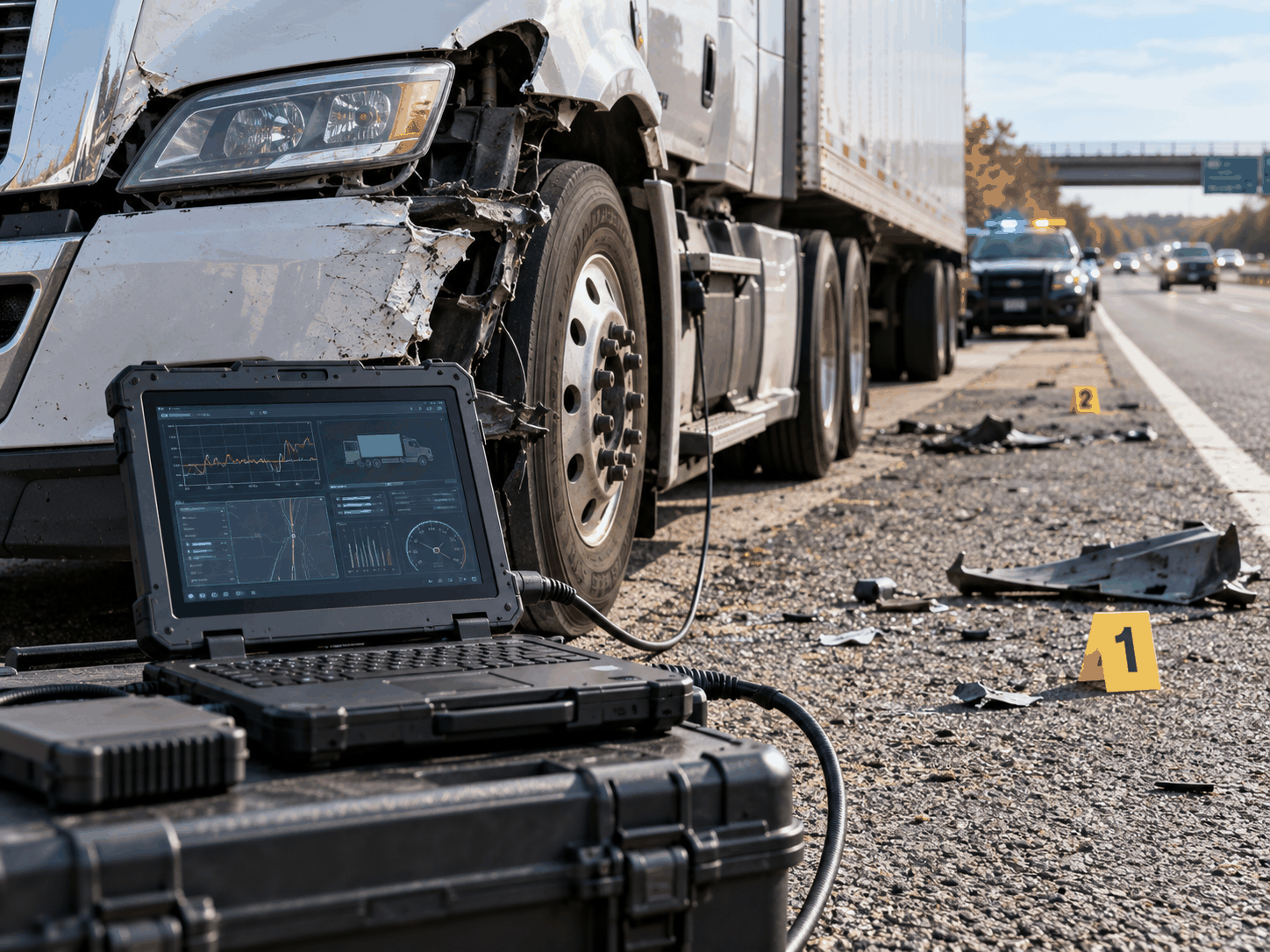
A truck's black box isn't one single device. The term usually refers to the engine control module, a small computer that runs the engine. Many of these modules also save driving data when something unusual happens, such as hard braking or a sudden drop in speed. The table below shows the main types of truck data.
| Device | What It Records |
|---|---|
| Engine control module | Speed, braking, and engine use before a crash |
| Electronic logging device | Hours on duty, driving time, and location |
| GPS or fleet tracking | Location, route, and speed over time |
| Dash camera | Video of the road and sometimes the driver |
Each device tells a different part of the story. The engine control module can show what happened in the final seconds, while the logging device can show whether the driver was too tired to drive safely. GPS records can confirm where the truck went and how fast it traveled along the way.
Not every truck has every type of device, and trucking companies use different systems that store data in different ways. Pulling the data out often takes special software and trained experts. That's one reason crash victims shouldn't assume the trucking company will hand over this evidence on its own.
Facts Black Box Data Can Reveal After a Truck Crash
Black box data can turn a dispute over what happened into a case built on facts. Here's some of what this data may reveal.
- Speed Before Impact – Electronic records can show whether the truck was speeding or going too fast for the conditions.
- Brake Use – Records can show when the driver hit the brakes or whether the driver braked at all.
- Hours Behind the Wheel – Logging data can show whether the driver broke federal driving limits meant to prevent fatigue.
- Equipment Problems – Fault codes saved by the engine computer can point to brake, engine, or other mechanical trouble.
This information matters because truck drivers and their employers often tell a different story after a crash. A driver might say they were going the speed limit when the data says otherwise. When the numbers don't match the driver's account, that gap can help prove negligence, the legal word for careless behavior that causes harm.
Why Truck Black Box Data Can Disappear Quickly
Black box data is fragile. Some engine computers only save a short window of information around a hard-braking event. If the truck goes back on the road, new events can record over the old ones. The data that could prove a crash victim's case might be gone within days.
Trucking companies also control what happens to the truck after a crash. They may repair it, put it back in service, or sell it for salvage, and any of those steps can wipe out or damage the data. A company doesn't always need a bad motive for this to happen, but the result is the same.
Logging records face their own time limit. Under 49 CFR 395.8, trucking companies must keep logging records for six months. After that, the law doesn't require them to hold on to the data. Six months can pass quickly while an injured person is focused on medical treatment and recovery.
How Truck Accident Victims Can Protect Black Box Evidence
Acting fast is one of the best ways to protect this evidence. Several steps can help keep electronic truck data from disappearing.
- Preservation Letter – This formal letter warns the trucking company to save the truck, its data, and related records.
- Court Order – If a company won't cooperate, a judge can order it to save the truck or allow an inspection.
- Expert Download – Trained specialists can pull the data with the right equipment without damaging or changing it.
- Supporting Evidence – Photos, dash camera video, and the police report can back up what the black box data shows.
A preservation letter is sometimes called a spoliation letter. Spoliation is the legal term for destroying or failing to keep evidence. Sending this letter early puts the trucking company on notice that the data matters to a legal dispute. After that, destroying it can lead to serious consequences for the company in court.
If a Trucking Company Destroys the Data
Delaware courts can respond when a company destroys evidence it should have kept. In Sears, Roebuck and Co. v. Midcap, the Delaware Supreme Court explained when a jury can be told to assume the missing evidence would have hurt the party that lost it. That's called an adverse inference.
There's a catch. The court must first find that the company destroyed the evidence intentionally or recklessly. Reckless generally means acting with a conscious disregard for an obvious risk. That finding can be hard to win if the data was lost by accident before anyone asked to save it.
That's why timing matters so much. An early preservation letter makes it harder for a trucking company to claim it didn't know the data mattered. It also gives a crash victim a better shot at getting the actual data, which is usually far more useful than a jury instruction.
Getting to the Data Before the Trucking Company Does
Truck crashes in Delaware often involve powerful trucking companies with lawyers and investigators of their own. They often start building their defense right after the crash, sometimes before you've even left the hospital. Meanwhile, the black box data that could prove your claim may be sitting inside a truck they control.
Our Georgetown truck accident lawyers have served Sussex County since 1983. We know how to send preservation letters, work with data experts, and dig into trucking company records. We also use that evidence to push back when trucking insurance companies try to blame you or downplay your injuries.
You shouldn't have to fight a trucking company on your own. We treat our clients like family, and we move quickly to protect the evidence in your case. Schedule a free consultation to see how we can help you. A Delaware truck accident attorney at our firm can review what happened, explain your options, and help you take the next step.
"Mr. Gill is an exceptional lawyer with a very helpful and knowledgeable receptionist and a skilled team of investigators to provide the best defense possible in case bar none." — George R., ⭐⭐⭐⭐⭐