
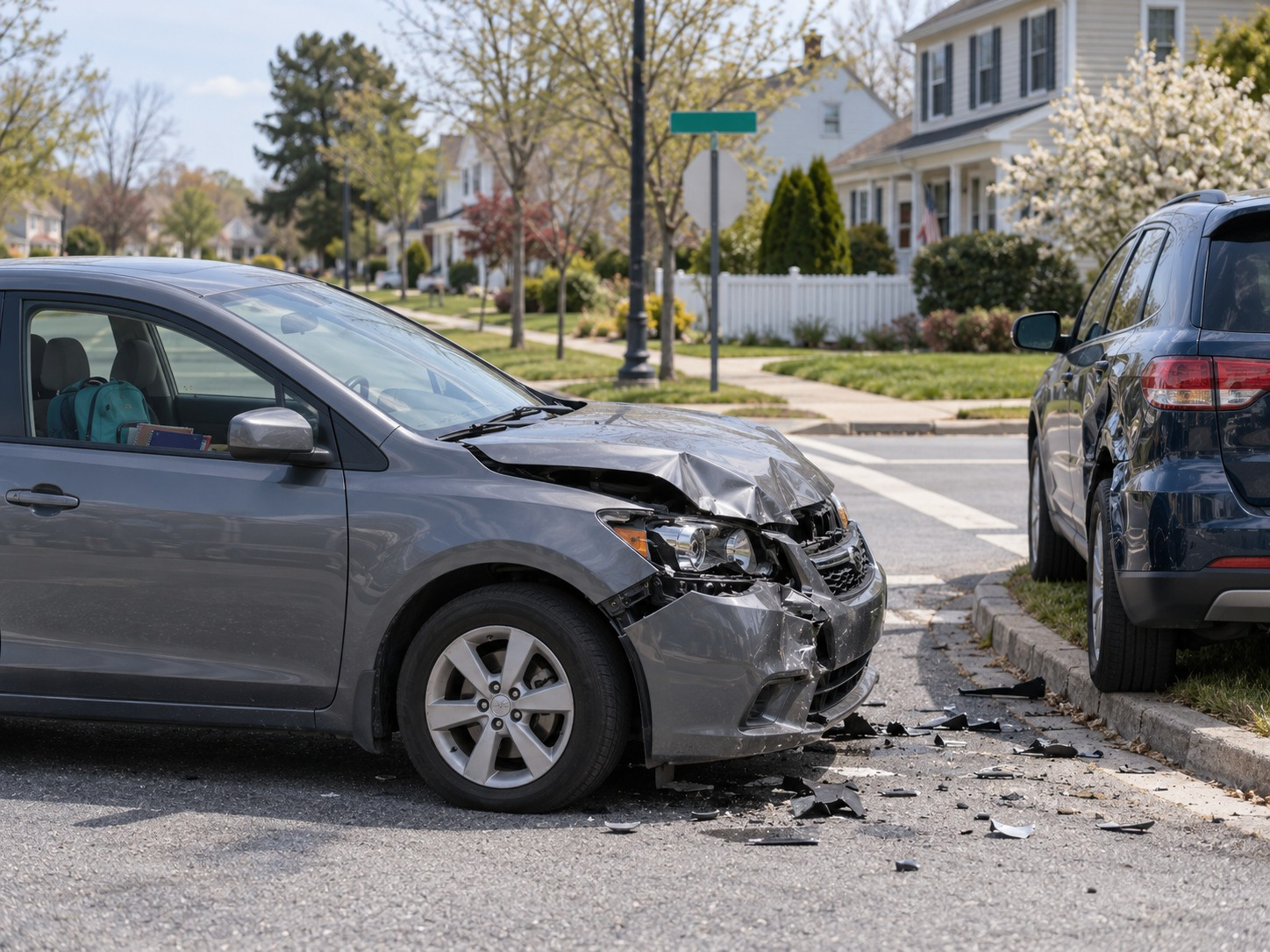
 Two Delaware Laws Can Make an Adult Liable for a Minor's Crash
Handing a teenager the keys to the family car feels like an ordinary rite of passage. After a serious car accident, though, Delaware law can put an adult on the same claim as the teenage driver even when that adult was nowhere near the crash.
Teen drivers face more crash risk than any other age group on the road. According to the Centers for Disease Control and Prevention, drivers ages 16 to 19 have a fatal crash rate almost three times as high as drivers 20 and older per mile driven. The risk is particularly high during the first months after a teen becomes licensed.
Our Georgetown car accident lawyers at Gill, Welsh, and Chamberlain, P.A. investigate more than what the teenage driver did behind the wheel. When the driver is under 18, we also need to determine who signed the license application, who owned the vehicle, who allowed the teen to drive it, what insurance applies, and whether the adults involved had prior reason to question the teen's ability to drive safely.
Quick Facts
- Delaware Has Two Statutory Routes: One can impose liability on the adult who signed a minor's license application. Another can impose liability on an owner or other person who knowingly allows or furnishes a vehicle to a minor.
- The Driver Must Be Under 18: These specific parental and owner liability statutes apply to minors under age 18. A crash caused by an 18- or 19-year-old requires a different analysis.
- The Parent Doesn't Have to Be in the Car: Liability under these statutes is based on the adult's legal connection to the minor or vehicle, not on the adult personally causing the collision.
- More Than One Adult May Be Involved: The person who signed the license application and the person who owns or furnishes the vehicle don't necessarily have to be the same person.
- Separate Negligence May Matter Too: Delaware also recognizes negligent entrustment when someone provides a vehicle to a driver they knew or had reason to know was reckless or incompetent.
Delaware Laws That Can Put an Adult on the Same Claim as a Minor
Delaware doesn't rely on one general rule that automatically makes every parent responsible for every crash caused by a child. Instead, two statutes create different paths to liability when the driver is under 18.
- 21 Del. C. § 6104 deals with the person who signed the minor's driver's license application. If the minor was licensed under Delaware's minor-driver statute and negligently causes a crash while driving on a highway in the state, the minor's negligence can be legally imputed to the person who signed the application.
- 21 Del. C. § 6105 takes a different route. It applies to an owner who causes or knowingly permits a minor under 18 to drive the vehicle on a highway, as well as a person who gives or furnishes a vehicle to the minor. The statute can make that person jointly and severally liable with the minor for damages caused by the minor's negligent driving.
The distinction can make a major difference after a crash because the adult who sponsored the teenager's license may not be the adult who owns the vehicle involved.
What Does Delaware's License Sponsor Law Mean?
Delaware requires most applicants under 18 to have an adult sponsor sign the application for a Level 1 Learner's Permit or driver's license. That sponsor is often a parent or guardian, although Delaware law allows certain other adults to serve in that role.
Signing carries a legal consequence. Under § 6104, the minor's negligence can be passed along to the person who signed the application, making the sponsor jointly and severally liable with the minor for damages resulting from the crash.
Delaware's own civil jury instructions on parental liability spell the rule out clearly. If the jury finds that the adult signed the minor's driver's license application, that adult can be liable for damages caused by the minor's negligent operation of a vehicle on a highway.
The adult doesn't have to be riding in the car or directing the teen at the time of the collision. But there still has to be negligence by the minor. Signing the application doesn't make the adult responsible for a collision the teenager didn't cause.
Can a Parent Be Liable Without Signing the Teen's License Application?
Yes. That's where § 6105 can become important.
An adult who owns the vehicle and knowingly permits a minor under 18 to drive it can potentially be liable for damages caused by the minor's negligence. The law also reaches a person who gives or furnishes a motor vehicle to the minor.
This rule isn't limited to parents. Depending on the facts, it could involve a grandparent, another relative, or someone else who owns or furnishes the vehicle.
The original licensing status shouldn't be confused with this rule. Section 6105 doesn't say that the teenager has to be driving without a full license. The important questions include the driver's age, whether the adult owned or furnished the vehicle, whether the adult caused or knowingly permitted the minor to drive it, and whether the teen's negligence caused the crash.
Could the License Sponsor and Vehicle Owner Both Be Liable?
Potentially. This is one of the more important distinctions in Delaware law.
Imagine a 17-year-old whose mother signed the driver's license application. The teenager later borrows a vehicle owned by a grandparent, with the grandparent's knowledge and permission, and negligently causes a crash on a Delaware highway.
The mother's potential liability would be analyzed under § 6104 because she sponsored the minor's license. The grandparent's potential liability would be analyzed separately under § 6105 because the grandparent owned and knowingly permitted use of the vehicle.
That doesn't mean every crash produces multiple responsible adults. It does mean an attorney investigating a serious teen-driver collision should identify both the license sponsor and the vehicle owner instead of assuming they're the same person.
What Changes When the Teenage Driver Is 18 or 19?
This is an important limit on Delaware's statutory parental-liability rules. Sections 6104 and 6105 repeatedly refer to a minor under age 18.
That means a parent isn't automatically liable under these statutes simply because an 18- or 19-year-old child was driving the family vehicle. Delaware has also rejected the broad "family purpose" theory that would make a parent liable merely because a family member negligently operated a family car.
Other legal theories may still apply, though. Ownership, agency, employment, insurance coverage, and negligent entrustment can all matter depending on the facts.
That's why the driver's exact age on the date of the collision should be one of the first things a lawyer verifies.
Can a Parent Be Liable for Knowingly Giving a Dangerous Teen Driver the Keys?
Possibly, and this is different from the automatic statutory imputation rules.
Delaware recognizes a separate claim called negligent entrustment. Under that theory, liability can arise when someone entrusts a vehicle to a reckless or incompetent driver and knew or had reason to know the driver posed that risk.
Delaware courts have described the standard as demanding. A single mistake behind the wheel usually isn't enough by itself. Evidence might instead involve a documented history of reckless driving, repeated crashes, serious license problems, substance abuse affecting driving, or other facts showing the adult knew or should have known that handing over the vehicle created an unreasonable risk.
A recent Delaware Superior Court decision discussing negligent entrustment identifies four central issues: whether the vehicle was entrusted, whether the driver was reckless or incompetent, whether the person furnishing the vehicle had reason to know it, and whether damages resulted.
This type of claim focuses on the adult's own conduct, not simply the fact that they're related to the driver.
What if the Crash Happened Somewhere Other Than a Public Highway?
The location can matter more than many people realize. Both §§ 6104 and 6105 refer specifically to the minor driving on a highway.
A collision in a shopping-center lot, private driveway, private road, or another location can therefore require closer legal analysis rather than an assumption that the statutory parental-liability rules automatically apply.
The underlying teenage driver's negligence may still support a claim, and other theories of liability may remain available. But an attorney should confirm where the collision happened and how Delaware law classifies that location before relying on either parental-liability statute.
Can a License Sponsor Withdraw Permission Before the Teen Turns 18?
Yes. Delaware gives the sponsor unusual control over a minor's driving privileges.
Under 21 Del. C. § 2710, the sponsor who signs the application can withdraw the endorsement before the minor turns 18. Doing so cancels the minor's driving authority until an approved sponsor signs a new application or the person reaches the age at which sponsorship is no longer required.
That can become important when a family has already become concerned about a teenager's driving. It also means the paperwork surrounding the teen's license may be relevant evidence after a crash, particularly when there is a dispute about who sponsored the license or whether sponsorship had been withdrawn.
What Compensation May Be Available After a Teen Driver Causes a Crash?
Identifying everyone who may be legally responsible is only part of the claim. An injured person also has to document the losses caused by the collision.
- Medical Expenses – Emergency treatment, hospitalization, surgery, medication, rehabilitation, and medically supported future care.
- Lost Income and Earning Capacity – Wages lost during recovery and, in serious cases, a reduction in future earning ability.
- Pain and Suffering – Compensation for physical pain, emotional distress, disability, and other non-economic effects of the crash.
- Property Damage – Repair or replacement costs for the vehicle and other property damaged in the collision.
Delaware also requires registered vehicles to carry Personal Injury Protection coverage. PIP can pay certain medical expenses and lost earnings without waiting for the liability dispute to be resolved. A separate claim against the negligent teen and any legally responsible adult can address additional losses that aren't fully covered by PIP.
Our Delaware car accident compensation page explains the different categories of damages and how comparative fault can affect what an injured person ultimately receives.
How Does Auto Insurance Fit Into a Teen Driver Claim?
Insurance can become one of the most disputed parts of the case. Delaware requires vehicles registered in the state to carry liability insurance and PIP, but the actual coverage available after a teen-driver crash depends on the policy, the vehicle, the insureds, and the circumstances of the use.
The Delaware Department of Insurance explains that the state's minimum liability limits are relatively low compared with the losses that can follow a serious injury. A catastrophic crash can therefore exceed the available liability limits quickly.
A lawyer can obtain and review the applicable policy rather than relying on assumptions about whether a teenager was "covered." The investigation may need to identify:
- The Policy Covering the Vehicle – The vehicle involved may be insured under a parent's, grandparent's, or another owner's policy.
- The Teen's Status Under the Policy – Whether the driver was listed, excluded, or otherwise qualified as an insured can affect the coverage analysis.
- Permission to Use the Vehicle – Policy language concerning permissive use may matter depending on who owned the car and who allowed the teen to drive.
- Available Liability Limits – A serious injury may create losses far above Delaware's minimum coverage requirements.
An insurer's coverage position and Delaware's separate rules imposing civil liability aren't necessarily the same question. That's one reason the policy itself needs to be reviewed before anyone assumes which insurance will pay.
Why Fault Still Has to Be Proven Against the Teenage Driver
Neither parental-liability statute eliminates the need to determine whether the teen actually caused the crash.
Police reports, photographs, witness statements, traffic-camera footage, vehicle damage, phone records, and other evidence can help establish whether the teen was speeding, distracted, failed to yield, followed too closely, or committed another driving error.
Delaware also follows modified comparative negligence. If the injured person shares some responsibility, compensation can be reduced by that percentage of fault. Recovery is barred when the injured person's negligence is greater than the negligence of the defendant or defendants.
That makes a strong investigation important even when the driver's age appears to create a clear route to parental liability. The first question remains who actually caused the Delaware car accident.
How Can a Georgetown Car Accident Lawyer Help After a Teen Driver Crash?
A claim involving a minor driver can require more investigation than an ordinary two-driver collision. A lawyer may need to identify the license sponsor, vehicle owner, person who furnished the car, applicable insurance policies, the teenager's driving history, and any evidence that an adult already knew the teen posed a serious driving risk.
Our Georgetown car accident lawyers at Gill, Welsh, and Chamberlain, P.A. have recovered millions of dollars for people injured throughout Delaware. We can investigate who may be legally responsible, deal directly with the insurance companies, preserve crash evidence, and pursue every available source of compensation.
If your family was injured by a teenage driver, or if you're dealing with questions about liability after your own minor child caused a crash, contact us to talk through what happened. We'll explain which Delaware rules apply and what the evidence and insurance coverage mean for your specific situation.
"Mr. Welsh fit me in on an emergency based situation and even though I could not retain him, he still spent time learning my concerns and needs and even offered to email him with any further questions. Couldn't ask for more than what I was presented!" - Ashley S., ⭐⭐⭐⭐⭐